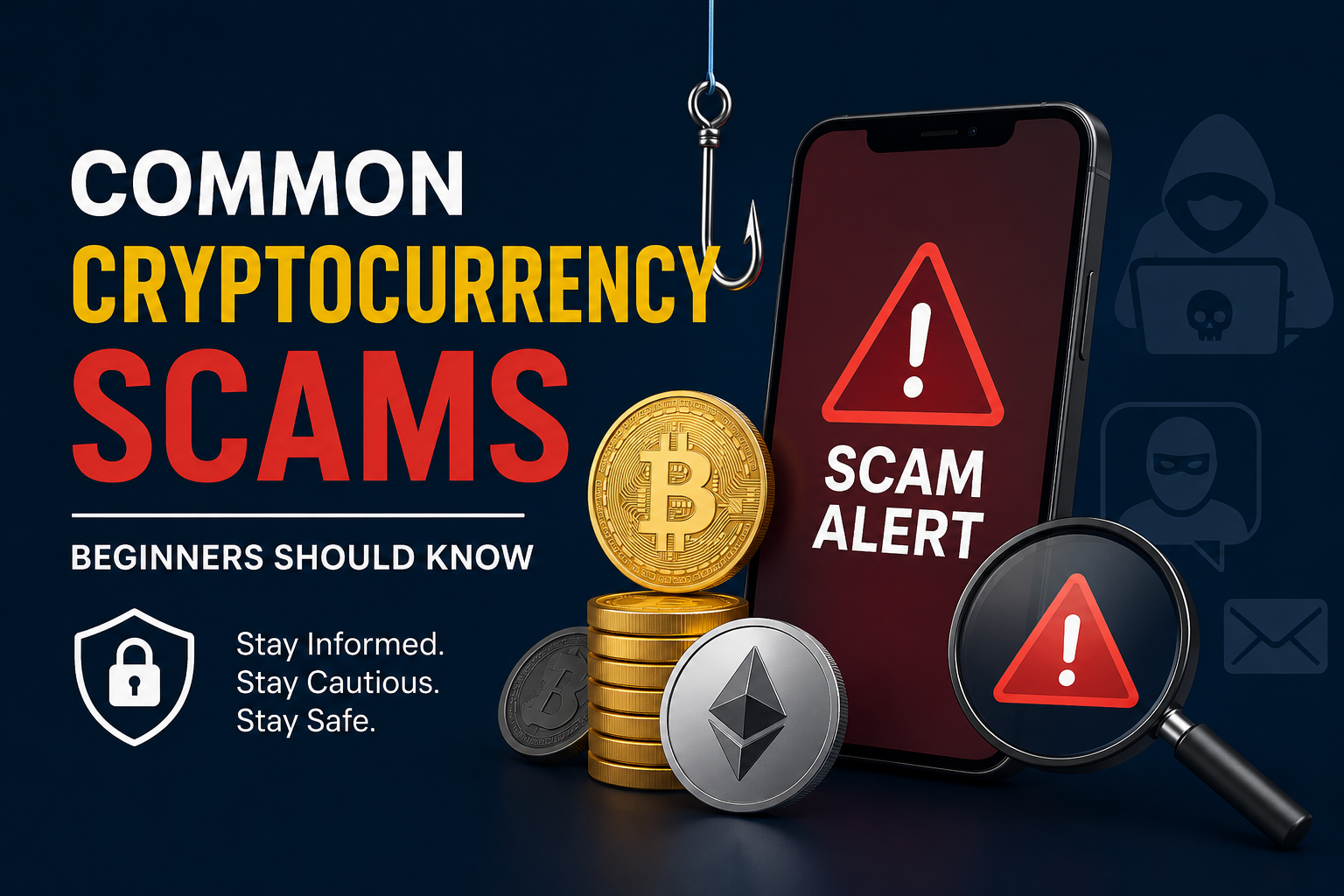
When I first started learning about cryptocurrency, I thought the biggest challenge would be understanding wallets, blockchain networks, Bitcoin, and different types of coins. Later, I realized that there was another important thing every beginner needs to understand, and that is cryptocurrency scams.
Crypto can be a useful technology, but the industry also attracts scammers because transactions can be difficult to reverse and many beginners do not fully understand how digital assets work. Scammers often take advantage of people’s excitement, fear, greed, or lack of experience.
In my opinion, learning about common crypto scams is just as important as learning how to buy or store cryptocurrency. If you know how scammers operate, you can become much better at protecting yourself.
Here are some of the most common cryptocurrency scams that beginners should know about.
Fake Cryptocurrency Investment Opportunities
One of the most common scams I see in the crypto world is the fake investment opportunity. A scammer may promise that you can turn a small amount of money into a huge profit within a short time.
For example, someone might claim that investing $100 will give you $1,000 within a few weeks. They may even show screenshots of people supposedly making thousands of dollars.
The problem is that these screenshots and testimonials can easily be fake.
Some scammers create professional looking websites and social media pages to make their investment schemes look legitimate. They may also provide fake dashboards where your account appears to be growing. When you try to withdraw your money, they suddenly ask for additional fees or taxes.
I believe beginners should be extremely careful whenever someone guarantees profits. Real investments always involve risk, and nobody can honestly guarantee huge returns.
Phishing Scams
Phishing is another major problem in cryptocurrency. In this type of scam, criminals try to trick you into giving them sensitive information such as your password, private key, or wallet recovery phrase.
A phishing message might look like it came from a cryptocurrency exchange or wallet provider. It may say that your account has a security problem and that you need to log in immediately.
The message usually contains a link.
When you click the link, you may be taken to a fake website that looks almost identical to the real one. If you enter your login details, the scammer can capture them.
Some phishing attacks are even more dangerous because they ask for your recovery phrase. A legitimate wallet service should never need you to send your recovery phrase through a message or email.
My personal rule is simple. I never trust links in unexpected crypto messages. If I need to access an exchange or wallet, I prefer opening the official website or application myself.
Fake Cryptocurrency Apps and Websites
Another scam beginners should understand involves fake apps and websites.
Scammers can create websites that look almost exactly like popular cryptocurrency platforms. They may copy logos, colors, layouts, and even customer support pages.
A beginner may believe they are using a real platform when they are actually giving information directly to criminals.
Fake mobile applications can create the same problem. Before installing a crypto application, I recommend checking the developer name, reviews, download numbers, official website, and other information carefully.
Even then, I would not rely on one detail alone. Scammers can create convincing fake reviews and websites.
It is much safer to find the official application through the project’s verified website rather than clicking on random advertisements or links.
Giveaway Scams
Crypto giveaway scams became very popular because scammers know that people love the idea of getting free cryptocurrency.
You might see a social media post claiming that a famous person, company, or cryptocurrency project is giving away Bitcoin or another digital currency.
The scammer may say that if you send a certain amount of cryptocurrency to a wallet address, you will receive twice as much back.
This sounds attractive, but it is usually a trap.
If you send your cryptocurrency to the scammer, you probably will not receive anything in return. Blockchain transactions are generally irreversible, so getting your money back can be extremely difficult.
I always remind myself that free money offers should be treated with suspicion, especially when someone asks me to send money first.
Romance and Friendship Scams
Romance scams are not limited to traditional banking. Cryptocurrency has also become a tool used by online criminals who build fake relationships with victims.
A scammer may contact someone through social media, a dating application, or another online platform. They slowly build trust and friendship.
After gaining the person’s confidence, they may start talking about cryptocurrency investments.
They might claim that they have discovered a special trading strategy or investment platform. Eventually, they encourage the victim to send cryptocurrency.
The emotional side of these scams makes them especially dangerous. The victim may trust the person because they believe they have built a genuine relationship.
In my opinion, money should never be sent to someone simply because you trust them online. A person can appear friendly, caring, and honest while hiding their real intentions.
Ponzi and Pyramid Schemes
Ponzi and pyramid schemes have existed for many years, but scammers now use cryptocurrency to make them look modern.
These schemes often promise extremely high returns. Early participants may receive money, which makes the system appear legitimate.
However, instead of generating real profits, the system may use money from new participants to pay earlier participants.
This can continue for some time, creating the impression that everyone is making money. Eventually, when new money stops coming in, the system can collapse.
I think one of the biggest warning signs is when a project focuses more on recruiting new members than providing a real product or service.
If someone tells you that the easiest way to make money is by bringing more people into a program, I would investigate very carefully before investing anything.
Fake Crypto Trading Platforms
Some scammers create fake trading platforms that show users fake profits.
At first, everything may look normal. You deposit money, buy cryptocurrency, and see your balance increasing.
The problem starts when you try to withdraw your funds.
The platform may suddenly demand a withdrawal fee, tax payment, verification charge, or some other payment. After you pay it, another problem appears.
This can continue until the victim realizes that the entire platform was fake.
A trading platform should be researched carefully before depositing money. I would look for independent information, established reputation, proper security practices, and clear company details.
Pump and Dump Scams
Pump and dump schemes can also cause serious losses.
In a typical pump and dump situation, a group of people promotes a cryptocurrency and creates excitement around it. They may make exaggerated claims about its future.
As more people buy the coin, its price can rise quickly.
The people behind the promotion may already own a large amount of the cryptocurrency. Once the price reaches a level they like, they sell their holdings.
The price can then fall rapidly, leaving new buyers with significant losses.
This is why I do not buy a cryptocurrency simply because its price is suddenly going up. A rising price does not automatically mean that a project is valuable.
Fake Airdrops
Airdrops can sometimes be legitimate ways for cryptocurrency projects to distribute tokens, but scammers also use fake airdrops to steal assets.
A fake airdrop may ask you to connect your wallet to a suspicious website. The website might then request permission to interact with your wallet or ask for sensitive information.
Some scams are designed to trick users into signing malicious transactions.
For beginners, this can be difficult to understand because connecting a wallet may seem harmless.
I believe it is important to understand what you are approving before signing any transaction. If you do not understand a request, stop and investigate it first.
Impersonation Scams
Another common scam involves impersonating famous people, cryptocurrency companies, influencers, or customer support representatives.
A scammer may create a social media account that looks almost identical to a real account. They might copy the person’s profile picture and username.
Then they contact users and ask for cryptocurrency, login information, or wallet details.
Sometimes scammers also pretend to be customer support after seeing someone publicly complain about a crypto problem.
A legitimate support representative should not randomly ask you for your private keys or recovery phrase.
I think checking the account carefully before responding can prevent many problems.
How Beginners Can Protect Themselves
The good news is that many cryptocurrency scams can be avoided if you develop a few simple habits.
First, never share your private key or wallet recovery phrase. Anyone who gets access to this information may be able to control your funds.
Second, avoid guaranteed profit claims. If an opportunity sounds too good to be true, there is a good chance that something is wrong.
Third, do your own research before investing. Do not depend entirely on social media posts, influencers, or messages from strangers.
Fourth, be careful with links. Instead of clicking links from unexpected emails or messages, visit the official website directly.
Fifth, take your time. Scammers often create a sense of urgency by saying that you must act immediately.
Personally, I believe slowing down is one of the best defenses against scams. When someone is trying to rush me into making a financial decision, I become even more careful.
Final Thoughts
Cryptocurrency scams are not something beginners should ignore. The technology itself can be useful, but the growing popularity of crypto has also created opportunities for criminals.
From fake investment platforms and phishing attacks to giveaway scams, romance scams, fake airdrops, and impersonation attempts, scammers use many different methods to target people.
The most important lesson I have learned is that there is no shortcut to guaranteed wealth. If someone promises easy money, asks for your recovery phrase, pressures you to invest immediately, or tells you to send cryptocurrency first, you should stop and investigate.
I believe cryptocurrency users do not need to be experts to stay safer. They simply need to develop good habits, question suspicious offers, protect their private information, and never make financial decisions based only on excitement or pressure.
The more you understand common scams, the easier it becomes to recognize the warning signs. For me, learning how scammers operate is one of the most valuable parts of becoming a responsible cryptocurrency user.