When I first learned about crypto scams, I thought most scams would be easy to recognize. I imagined that a scammer would simply ask someone to send money and disappear. But after learning more about crypto phishing scams, I realized that the situation can be much more complicated. Phishing scams are designed to look real, and that is exactly what makes them dangerous.
Crypto phishing scams usually try to trick people into giving away sensitive information such as wallet recovery phrases, private keys, passwords, or login details. Sometimes the scammer does not even ask for money directly. Instead, the goal is to gain access to the victim’s crypto wallet or exchange account.
In my opinion, understanding how these scams work is one of the best ways to protect yourself. When you know what scammers are trying to achieve, suspicious messages and websites become much easier to recognize.
What Is Crypto Phishing?
Crypto phishing is a type of online fraud where scammers pretend to be a trusted person, company, crypto platform, wallet service, or community. They usually contact the victim through email, social media, messaging apps, or fake websites.
The scammer creates a situation that makes the victim feel they need to act quickly. For example, they might claim that an exchange account has been locked or that a crypto wallet needs verification.
The victim is then given a link or another way to continue the process. The link may open a website that looks almost identical to a real crypto platform.
This is where the real danger begins.
If the victim enters their username, password, recovery phrase, or other private information, the scammer may collect it. In some cases, the victim may also be tricked into approving a malicious transaction from their wallet.
How Crypto Phishing Scams Usually Start
From what I have seen, many phishing scams begin with a simple message. The message might arrive through email, Telegram, Discord, social media, or another communication platform.
A scammer may pretend to be customer support and say there is a problem with your account. They may tell you that unusual activity has been detected or that your wallet requires immediate verification.
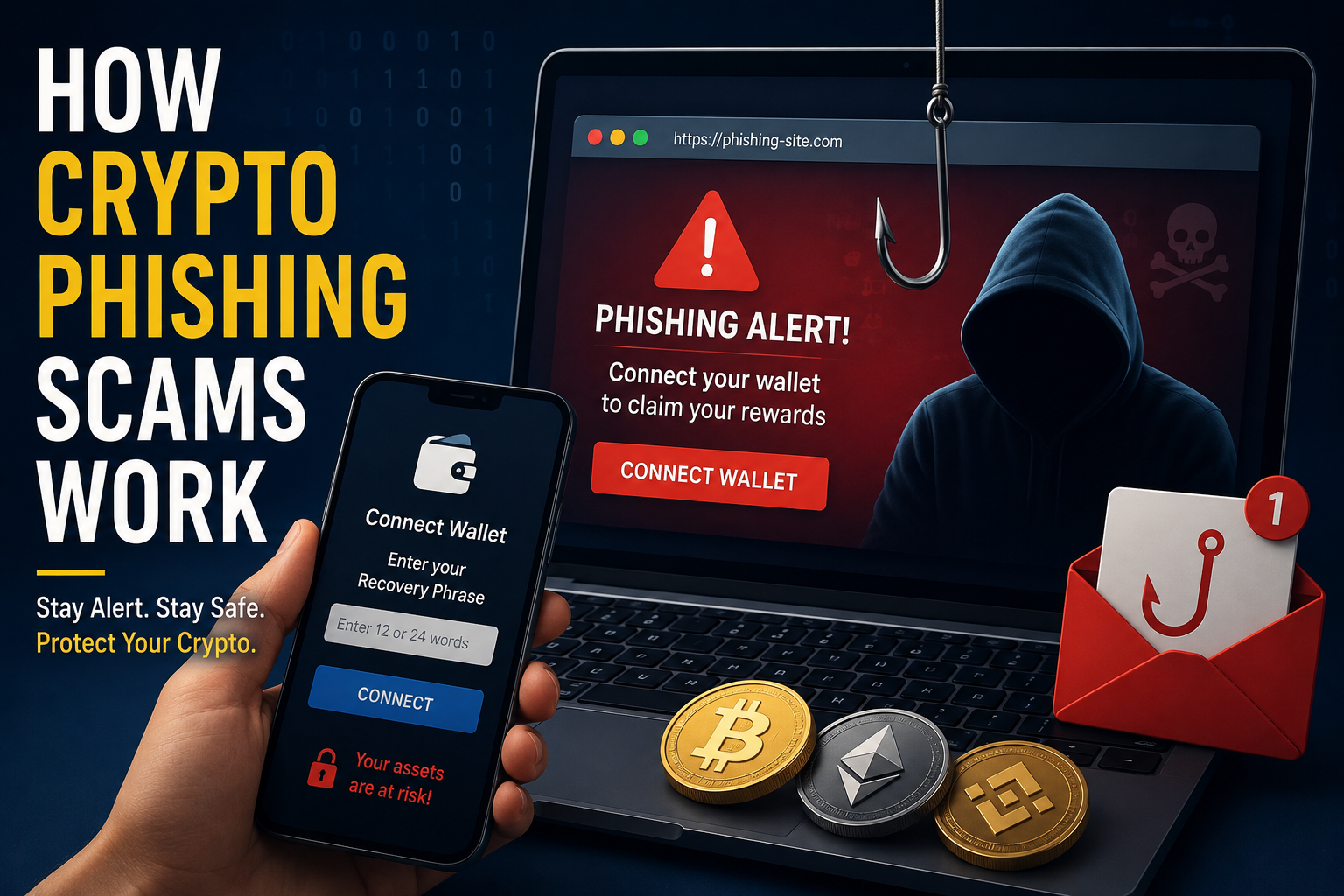
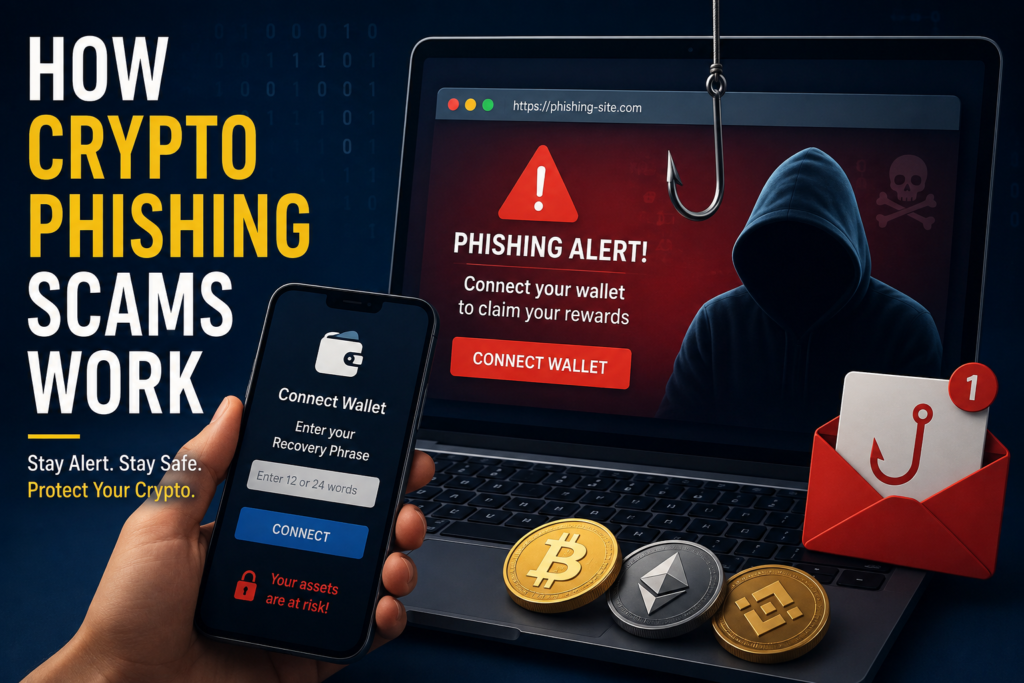
Another common approach is to create excitement. A scammer may claim that you have won a crypto giveaway or received free tokens. They might ask you to connect your wallet to a website to claim the reward.
There are also fake investment opportunities where scammers send messages promising high returns. They may use professional looking websites and fake testimonials to make the offer appear legitimate.
The common element is trust. The scammer wants the victim to believe that the message is coming from a real and reliable source.
Fake Crypto Websites
One of the most common methods used in crypto phishing is a fake website.
A fake website can be designed to look almost exactly like a popular crypto exchange or wallet service. The logo, colors, buttons, menus, and login pages may all look familiar.
This can make it difficult to notice the difference.
The biggest mistake a person can make is assuming that a website is safe simply because it looks professional. A professional design does not prove that a website is legitimate.
Scammers can copy the appearance of real websites very easily. What matters is the actual website address and how you reached the website.
Personally, I think it is much safer to open a crypto platform using a bookmark or by typing the official website address yourself rather than clicking a random link in an email or message.
Why Recovery Phrases Are So Important
A crypto wallet recovery phrase is one of the most valuable pieces of information a scammer can obtain.
A recovery phrase can allow someone to restore access to a wallet. This means that if a person gives their recovery phrase to a scammer, the scammer may be able to gain control over the assets stored in that wallet.
This is why I believe anyone using crypto should understand one simple rule.
Never share your recovery phrase with another person or enter it into a website simply because someone tells you to.
A legitimate support representative should not need your recovery phrase to help you with an account problem.
If a website suddenly asks for a recovery phrase without a clear and trustworthy reason, I would immediately stop and investigate further.
Phishing Through Fake Customer Support
Another method that I find particularly dangerous is fake customer support.
Imagine that you post online saying you have a problem with a crypto transaction. Soon after, someone contacts you claiming to be a support representative.
They may have a professional profile picture and use the name of a real company. They might even know some details about the problem you mentioned publicly.
The fake support agent may then send you a link and ask you to connect your wallet or provide information.
This is a common trap because people naturally trust someone who appears to be helping them.
Real support teams generally have official channels for customer assistance. If someone randomly contacts you and asks for sensitive information, I would not trust them without independently verifying who they are.
Phishing Through Emails
Email is another popular method used by scammers.
A phishing email may claim that your account needs attention. It might say that your password has expired, your account has been suspended, or a transaction needs confirmation.
The email may include a button that says something like Verify Account or Secure Wallet.
When the victim clicks the button, they may be taken to a fake login page.
The page can look completely normal. Once the victim enters their information, the scammer receives it.
One thing I always recommend is checking the sender’s email address carefully. A scammer may use an address that looks similar to a legitimate company but contains small differences.
Still, I would not rely only on the sender address because scammers can use many techniques to make messages appear trustworthy.
Social Media Crypto Phishing
Social media has also become a major place for crypto phishing.
Scammers can create fake accounts that look like famous crypto projects, exchanges, influencers, or developers. They may post fake announcements about giveaways, token launches, rewards, or special opportunities.
Sometimes the scammer copies the profile picture and name of a real person.
The victim may see the post and think it is an official announcement.
I think this is one reason people should avoid making financial decisions based only on social media posts. Before connecting a wallet or sending crypto, it is better to verify the information through an official source.
Fake Giveaways and Airdrops
Free crypto sounds attractive, and scammers know this.
A phishing scam may advertise a fake giveaway or airdrop and ask users to connect their wallet to claim free tokens.
The website might display a countdown timer to create urgency. It may also show fake information about how many people have already claimed the reward.
The goal is to make the victim act before thinking carefully.
In some cases, the website may ask the user to sign a transaction. The transaction may not be as harmless as it appears.
This is why I believe people should never connect their wallet to an unfamiliar website just because it promises free crypto.
Why Scammers Create Urgency
Urgency is one of the strongest tools used in phishing scams.
A scammer does not want you to stop and think. They want you to react quickly.
Messages may contain phrases suggesting that your account will be closed soon or that you must complete a verification process immediately.
Sometimes the scammer creates fear. Other times they create excitement by promising a limited opportunity.
Both approaches have the same purpose.
They try to reduce the amount of time you spend thinking about whether the request is genuine.
Whenever I see a message asking me to take immediate action with money or crypto, I consider that a warning sign. Taking a few minutes to verify the situation can prevent a much bigger problem.
Warning Signs of a Crypto Phishing Scam
There are several signs that can help identify phishing attempts.
One major warning sign is an unexpected request for private information. If someone asks for your recovery phrase, private key, password, or authentication code, you should be extremely careful.
Another warning sign is a suspicious link.
I also pay attention to unusual website addresses, spelling mistakes, strange messages, unrealistic rewards, and pressure to act immediately.
Another important warning sign is a promise that sounds too good to be true.
Crypto can provide opportunities, but nobody can honestly guarantee easy and huge profits without risk.
If someone promises guaranteed returns or free money in exchange for connecting your wallet, I would treat the offer as suspicious.
How I Would Protect Myself
The first thing I would do is avoid clicking unexpected links related to crypto accounts.
Instead, I would open the official platform directly using a trusted bookmark or a website address I already know.
I would also keep my recovery phrase stored privately and offline. I would never send it through email, chat, social media, or a support conversation.
Using strong passwords and two factor authentication can also add another layer of protection to exchange accounts.
I would also verify important announcements through official channels instead of trusting screenshots or random social media posts.
Most importantly, I would slow down.
Scammers depend on quick reactions. Taking a moment to check the website, sender, transaction details, and source can make a huge difference.
What To Do If You Clicked a Phishing Link
If you accidentally click a suspicious link, do not panic.
If you entered a password, change that password immediately from the official website. If the same password is used somewhere else, change it there too.
If you entered sensitive wallet information, the situation can be more serious. You should take immediate steps to protect any remaining assets and avoid interacting further with the suspicious website.
If you approved a transaction you did not understand, review your wallet activity and seek help from trusted official resources.
The important thing is to act quickly without making another rushed decision.
Final Thoughts
Crypto phishing scams work because they are built around human behavior rather than complicated technology alone. Scammers use trust, fear, excitement, urgency, and confusion to convince people to make mistakes.
In my view, the best protection is awareness. You do not need to become a cybersecurity expert to avoid many phishing scams. You simply need to develop good habits.
Never share your recovery phrase or private key. Do not trust unexpected support messages. Check website addresses carefully. Avoid clicking suspicious links. Verify important information through official sources.
Most importantly, do not allow anyone to pressure you into making a crypto decision quickly.
The crypto world can be useful and exciting, but it also requires responsibility. Once you understand how phishing scams work, you can become much more careful about what you click, what you approve, and who you trust. That small amount of caution can protect your digital assets from a very expensive mistake.