When I first started learning about cryptocurrency, one of the things that confused me the most was the difference between a hot wallet and a cold wallet. Both are used to store and manage crypto, but the way they work and the level of security they provide can be quite different.
In my opinion, understanding the difference between hot and cold wallets is important for anyone who owns cryptocurrency. It does not matter if you are a beginner with a small amount of crypto or an experienced investor holding a larger portfolio. Knowing where and how your crypto is stored can help you make better decisions and avoid unnecessary risks.
In this article, I will explain hot wallets and cold wallets in simple words. I will also share my point of view about their advantages, disadvantages, security, and which type of wallet I think is suitable for different situations.
What Is a Crypto Wallet?
Before comparing hot and cold wallets, I think it is important to understand what a crypto wallet actually does.
A crypto wallet does not really store your Bitcoin, Ethereum, or other cryptocurrencies inside the device or application like money is stored inside a physical wallet. Your cryptocurrency exists on the blockchain. The wallet mainly stores and manages the private keys that give you access to your crypto.
The private key is extremely important because it proves that you have control over your cryptocurrency. If someone gets access to your private key or recovery phrase, they may be able to take control of your funds.
This is why I believe choosing the right wallet should not only be about convenience. Security should always be considered as well.
What Is a Hot Wallet?
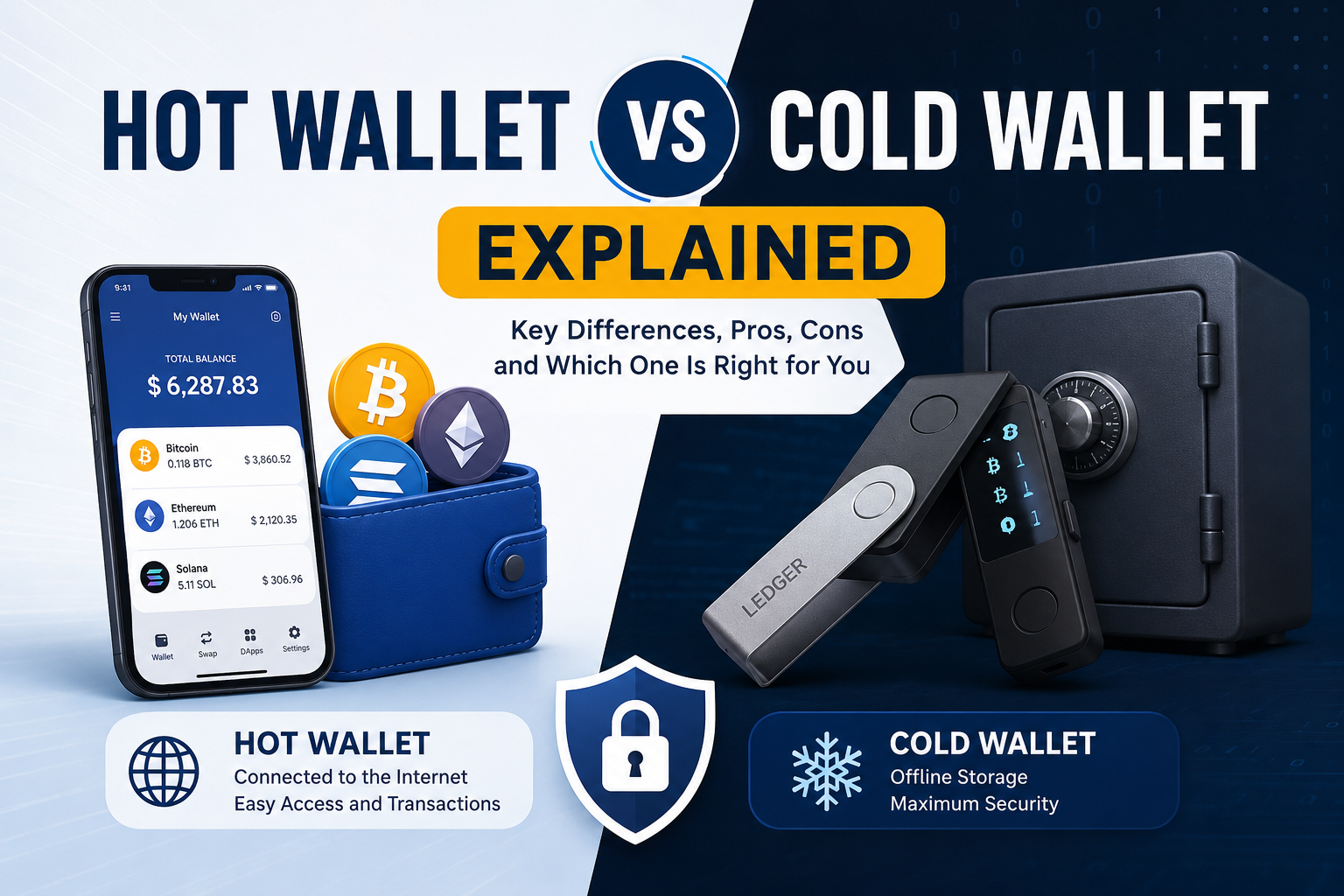
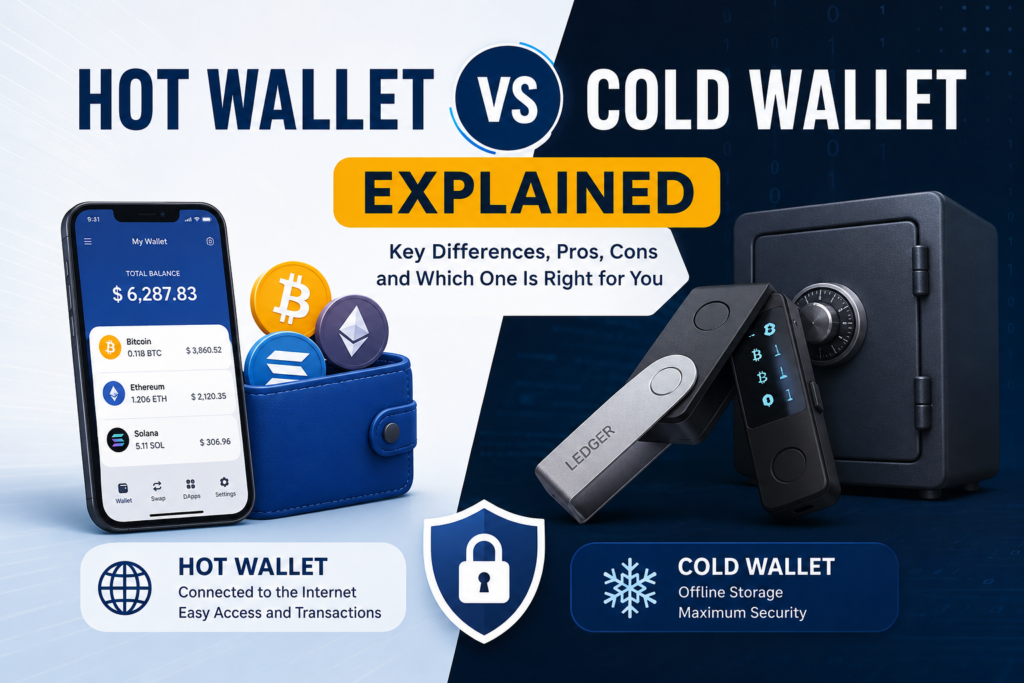
A hot wallet is a cryptocurrency wallet that is connected to the internet. These wallets are usually available as mobile apps, desktop applications, browser extensions, or online services.
Hot wallets are popular because they are easy to use. You can download a wallet application, create an account or wallet, and start sending and receiving cryptocurrency relatively quickly.
From my point of view, the biggest advantage of a hot wallet is convenience. If I wanted to make frequent crypto transactions, trade tokens, interact with decentralized applications, or use crypto for everyday activities, a hot wallet would probably be more practical.
There are many different types of hot wallets. Some are designed for beginners, while others offer advanced features for people who regularly interact with blockchain networks.
However, the biggest weakness of a hot wallet is also connected to the internet. Since the wallet is online, it can potentially be exposed to malware, phishing attacks, fake websites, malicious applications, and other online threats.
That does not mean every hot wallet is unsafe. A reputable wallet combined with good security practices can still provide a strong level of protection. However, I would personally be more careful about keeping a large amount of cryptocurrency in an internet connected wallet.
Advantages of Hot Wallets
One reason hot wallets are so popular is their simplicity.
First, they are usually easy to set up. Most wallets provide a straightforward process that beginners can understand.
Second, they are convenient for transactions. If I need to send crypto to another person or interact with a blockchain application, I can usually do it directly from my wallet.
Third, many hot wallets are free to use. Users normally do not need to purchase a physical device.
Another advantage is accessibility. If the wallet is installed on my phone or computer, I can access it whenever I need it, as long as I have the necessary security information.
For someone who regularly moves cryptocurrency, this convenience can be very useful.
Disadvantages of Hot Wallets
The biggest concern with hot wallets is online exposure.
Because the wallet is connected to the internet, users need to be careful about phishing websites, fake wallet applications, malicious links, and infected devices.
For example, someone might receive a message asking them to connect their wallet to a website. The website may look legitimate, but it could actually be designed to steal their funds or obtain sensitive information.
Another issue is that people sometimes become careless because hot wallets are easy to access. They may store their recovery phrase in a screenshot, save it in an online document, or share it with someone without realizing the danger.
In my opinion, the biggest security problem is often not the wallet itself but the way the user handles it.
What Is a Cold Wallet?
A cold wallet is a cryptocurrency wallet that keeps private keys offline when they are not being used. Hardware wallets are one of the most common examples of cold storage.
A hardware wallet is a small physical device designed to keep your private keys protected while allowing you to manage your cryptocurrency.
The main idea behind cold storage is simple. If the private keys are kept offline, they have less exposure to online attacks.
This is one of the reasons I consider cold wallets a better option for people who hold cryptocurrency for a long period of time and do not need to make frequent transactions.
Cold wallets can feel less convenient compared with hot wallets, but the extra security can be worth it when protecting a significant amount of money.
Advantages of Cold Wallets
The biggest advantage of a cold wallet is security.
Since the private keys are generally kept offline, it becomes much harder for a remote attacker to access them through the internet.
Another advantage is that cold wallets can be useful for long term investors. If someone buys cryptocurrency with the intention of holding it for years, they may not need to keep their funds in an easily accessible online wallet.
I also like the fact that a hardware wallet gives users more direct control over their private keys. Instead of depending entirely on an exchange to protect the funds, the user can manage their own wallet.
For me, this represents one of the most important ideas in cryptocurrency. If I control my private keys and protect my recovery phrase properly, I have more direct control over my assets.
Disadvantages of Cold Wallets
Cold wallets are not perfect either.
The first disadvantage is convenience. If I need to make frequent transactions, using a physical wallet can feel slower than using a mobile or browser based wallet.
There is also a cost involved. Good hardware wallets normally need to be purchased, while many hot wallets are available for free.
Another important point is that cold wallets do not protect users from every possible mistake. Someone can still lose their funds by revealing their recovery phrase, approving a malicious transaction, or purchasing a fake device from an unreliable seller.
The recovery phrase is especially important. If someone loses their hardware wallet but still has their properly stored recovery phrase, they may be able to recover their funds using another compatible wallet. But if the recovery phrase is lost or exposed, the situation can become very serious.
Hot Wallet vs Cold Wallet
When I compare the two, I think the choice mainly depends on how someone uses cryptocurrency.
Hot wallets are better for convenience, frequent transactions, smaller amounts, and interacting with blockchain applications.
Cold wallets are better suited for long term storage and larger amounts where security is a higher priority than instant access.
I do not think one option is automatically better for every person. It depends on the user’s goals.
For example, someone who regularly trades cryptocurrency might prefer a hot wallet for everyday activities. On the other hand, someone who buys Bitcoin and plans to hold it for several years might prefer keeping most of it in cold storage.
Which Wallet Should Beginners Use?
If I were advising a complete beginner, I would first recommend learning how wallets work before moving a large amount of money into any wallet.
A beginner can start with a reputable hot wallet and learn about sending, receiving, network fees, private keys, and recovery phrases.
Once the person becomes more comfortable with cryptocurrency and starts holding a larger amount, a hardware wallet may become a better option.
The most important thing is not simply choosing a wallet. It is learning how to use it safely.
I would never share a recovery phrase with another person. I would also avoid saving it in cloud storage, email, social media messages, or screenshots. I believe a recovery phrase should be treated with the same level of seriousness as the keys to a valuable safe.
My Final Thoughts
After understanding the difference between hot wallets and cold wallets, I see them as tools designed for different purposes.
A hot wallet is mainly about accessibility and convenience. It makes it easy to manage cryptocurrency, make transactions, and interact with blockchain applications.
A cold wallet focuses more on protecting private keys from online threats. It may not be as convenient, but for long term storage, I believe the additional security can make a big difference.
Personally, I would not think about the decision as hot wallet versus cold wallet where one completely replaces the other. I think both can have a place depending on the situation.
For everyday crypto activities, a hot wallet can be useful. For cryptocurrency that I plan to hold for a long time and do not need to access regularly, cold storage can make more sense.
At the end of the day, the safest wallet is not only the one with good technology. It is also the one that the owner understands and uses responsibly. No matter which type of wallet someone chooses, protecting the private key and recovery phrase should always be the first priority.
Cryptocurrency gives users more control over their money, but that control also comes with responsibility. Learning how wallets work is one of the first steps I would recommend to anyone who wants to take crypto seriously.