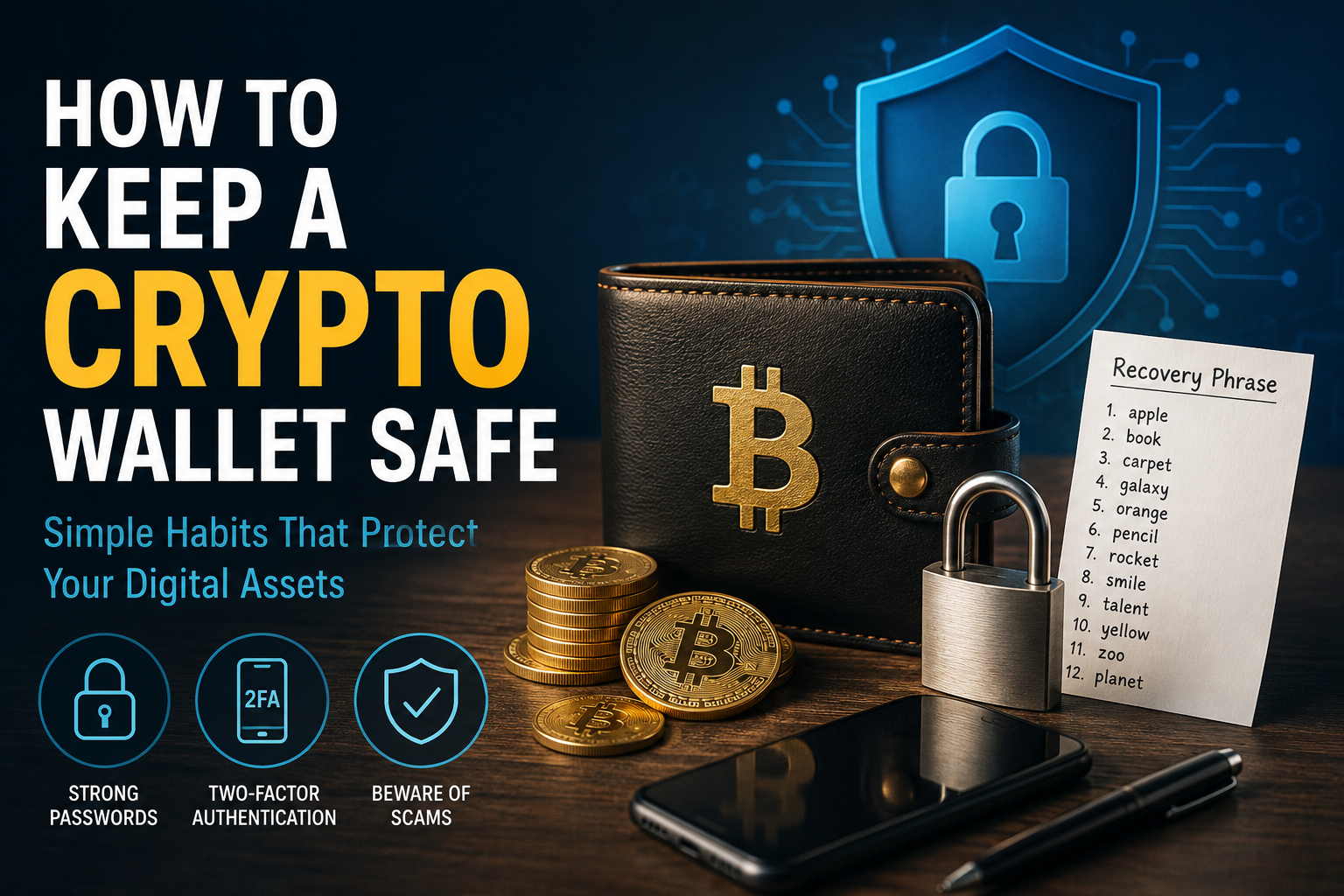
When I first started learning about cryptocurrency, I thought keeping crypto safe was mostly about choosing a good wallet. With time, I realized that the wallet itself is only one part of the security picture. The biggest responsibility actually falls on the person using it. If I am careless with my recovery phrase, click on a suspicious link, or share private information with someone, even the best wallet may not be able to protect my funds.
Crypto gives us more control over our money, but that control also comes with responsibility. There is usually no bank that I can call and ask to reverse a transaction if I make a mistake. Once crypto is sent to the wrong address or stolen because of poor security, recovering it can be extremely difficult.
In my opinion, keeping a crypto wallet safe is not about being an expert. It is mostly about developing good habits and understanding the basic risks. Here are the things I believe every crypto user should know.
Use a Trusted Crypto Wallet
The first step I take when thinking about wallet security is choosing a reliable wallet. There are many crypto wallets available today, but I would never choose one simply because it looks popular or has a large number of downloads.
Before using a wallet, I prefer to research who developed it, how long it has been around, what security features it provides, and whether it has a good reputation among users. I also make sure I download the wallet from its official website or an official app store.
Fake wallet applications are a real problem. Someone can create an application that looks almost identical to a legitimate wallet and use it to steal private keys or recovery phrases. This is why I believe the download source matters just as much as the wallet itself.
Protect Your Recovery Phrase
For me, the recovery phrase is one of the most important things in the entire crypto wallet. A recovery phrase is usually a group of words that can be used to restore access to a wallet.
I treat my recovery phrase like the key to my entire financial account. I never share it with anyone, and I never send it through email, messaging apps, social media, or any other online platform.
One thing that I think beginners should understand is that legitimate wallet support should not need my recovery phrase. If someone contacts me and asks for those words to verify my account, fix my wallet, or recover my funds, I would consider that a major warning sign.
I also avoid taking screenshots of my recovery phrase. Keeping the phrase digitally can create additional risks because phones, computers, cloud accounts, and online backups can potentially be compromised.
Store Your Recovery Phrase Offline
I personally believe that important crypto security information should stay offline whenever possible. Writing the recovery phrase on paper and storing it somewhere secure can be safer than keeping it in a phone or computer.
The location also matters. I would not leave the phrase somewhere that visitors, roommates, or other people can easily access. At the same time, I would not hide it in such a complicated place that I might forget where it is.
For people holding significant amounts of cryptocurrency, there are also more durable storage options designed to protect recovery information from physical damage. Whatever method someone chooses, the main idea is simple. The recovery phrase should be protected from both digital theft and physical loss.
Consider a Hardware Wallet
If I were holding a significant amount of cryptocurrency for a long period, I would seriously consider using a hardware wallet.
A hardware wallet is a physical device designed to keep private keys more isolated from internet connected devices. This can reduce some of the risks associated with malware and online attacks.
I do not think everyone needs a hardware wallet for a small amount of crypto. However, as the value of someone’s holdings increases, spending more time and money on security can make sense.
Even with a hardware wallet, though, I would still need to be careful. Hardware wallets do not magically protect users from every mistake. If I reveal my recovery phrase to a scammer, the device itself cannot save me.
Use Strong Passwords
If my wallet or related account uses a password, I make sure that password is strong and unique. I avoid using the same password across multiple accounts.
Using the same password everywhere creates a chain reaction risk. If another website suffers a data breach and my password is exposed, an attacker might try the same password on my crypto related accounts.
A password manager can be useful for creating and storing strong passwords. Instead of trying to remember dozens of complicated passwords, I can use a secure password manager and protect it with a strong master password.
Turn On Two Factor Authentication
Whenever two factor authentication is available, I prefer to enable it.
Two factor authentication adds another security layer because logging in may require something beyond just a password. Depending on the service, this could involve an authentication application, security key, or another verification method.
I would rather spend a few extra seconds during login than make it easier for someone to access an important account.
However, I also understand that not every type of two factor authentication provides the same level of protection. For important accounts, stronger methods such as authenticator applications or hardware security keys can be preferable to relying only on text messages.
Be Careful With Phishing Scams
In my opinion, phishing is one of the biggest dangers for crypto users because scammers often focus on human behavior instead of trying to break the technology itself.
A scammer may send an email, message, or social media post claiming that my wallet needs verification. They might say that my account is about to be suspended or that I have received a reward. The message may include a link that takes me to a fake website designed to steal my information.
I never want to make security decisions while feeling rushed or afraid. If a message tells me that I must act immediately, I stop and verify the information through an official source.
I also carefully check website addresses before connecting a wallet. A fake website can look almost exactly like a legitimate one.
Never Share Private Keys
A private key should be treated as highly sensitive information. Anyone who obtains control of a wallet’s private key may potentially gain access to the assets associated with it.
Because of this, I never share private keys with friends, strangers, online support agents, influencers, or anyone else.
I also stay away from people who promise guaranteed crypto profits in exchange for wallet access. There is no legitimate reason for someone who wants to help me with an investment to require control of my wallet.
Be Careful When Connecting Your Wallet
Another habit I consider important is checking what I am actually approving when connecting a wallet to a website or decentralized application.
Sometimes users connect their wallets without thinking about what permissions they are giving. A malicious or compromised application may try to get users to approve transactions that allow assets to be moved.
I try to read transaction details before confirming them. If something looks unusual, I would rather cancel the transaction and investigate than approve it just because I am in a hurry.
This is especially important when using decentralized finance platforms, NFT marketplaces, token websites, and other blockchain applications.
Keep Your Devices Updated
Wallet security is also connected to the security of the device I use.
I keep my operating system, browser, wallet applications, and security software updated. Updates often include important security fixes, so ignoring them can leave known weaknesses unprotected.
I also avoid installing random software or browser extensions from unknown sources. The fewer suspicious applications I install, the fewer opportunities I give attackers to compromise my device.
Avoid Public WiFi for Sensitive Transactions
I am also careful when accessing important financial accounts through public WiFi networks.
Public networks can sometimes create additional security risks, especially if I am using an unsecured device or connecting to a fake network. For sensitive crypto activity, I prefer using a trusted private connection.
If I have any doubt about the security of the network or device, I simply wait until I can use a safer environment.
Double Check Every Crypto Address
Crypto transactions are generally irreversible, which is why I always double check the receiving address before sending funds.
Even a small mistake can result in crypto being sent somewhere I did not intend. I check the address carefully and, when possible, use a trusted method such as copying and verifying the address rather than manually typing a long string.
For larger transactions, I believe sending a small test amount first can also be a sensible precaution when appropriate.
Keep Your Crypto Security Simple
One lesson I have learned is that complicated security does not always mean better security. The best security system is one that I can consistently follow.
If I create a complicated setup that I do not understand, I might eventually make a mistake. I prefer a simple approach where my recovery phrase is securely stored, my passwords are strong, my important accounts have additional protection, and I regularly check what I am approving.
I also think it is important to separate everyday spending from long term holdings. Keeping everything in one wallet may not always be the best approach. Some people may prefer one wallet for regular transactions and another more secure setup for long term storage.
Final Thoughts
Keeping a crypto wallet safe is ultimately about responsibility and awareness. Cryptocurrency can give me more control over my money, but I also have to take security seriously.
For me, the most important rules are simple. I protect my recovery phrase, use trusted wallets, avoid suspicious links, create strong passwords, enable additional security features, keep my devices updated, and carefully check every transaction before approving it.
I also remind myself that scammers do not always attack the technology. Sometimes they simply try to trick the person using it. That is why being patient and careful can be just as important as using good security tools.
Crypto security is not something I should think about only after losing money. It should be part of my routine from the moment I create a wallet. A few careful habits today can potentially save me from a very painful mistake in the future.