When I first heard the term Bitcoin mining, I honestly thought it had something to do with digging for Bitcoin like people dig for gold. The word mining can make the idea sound complicated, especially if you are completely new to cryptocurrency. However, after understanding how Bitcoin works, I realized that Bitcoin mining is simply a process that helps keep the Bitcoin network secure, confirms transactions, and creates new bitcoins.
In this article, I will explain Bitcoin mining in simple words so that even someone who has never used cryptocurrency can understand it. I will also explain how miners work, why mining is important, what miners need, and why Bitcoin mining requires a lot of computer power.
What Is Bitcoin Mining?
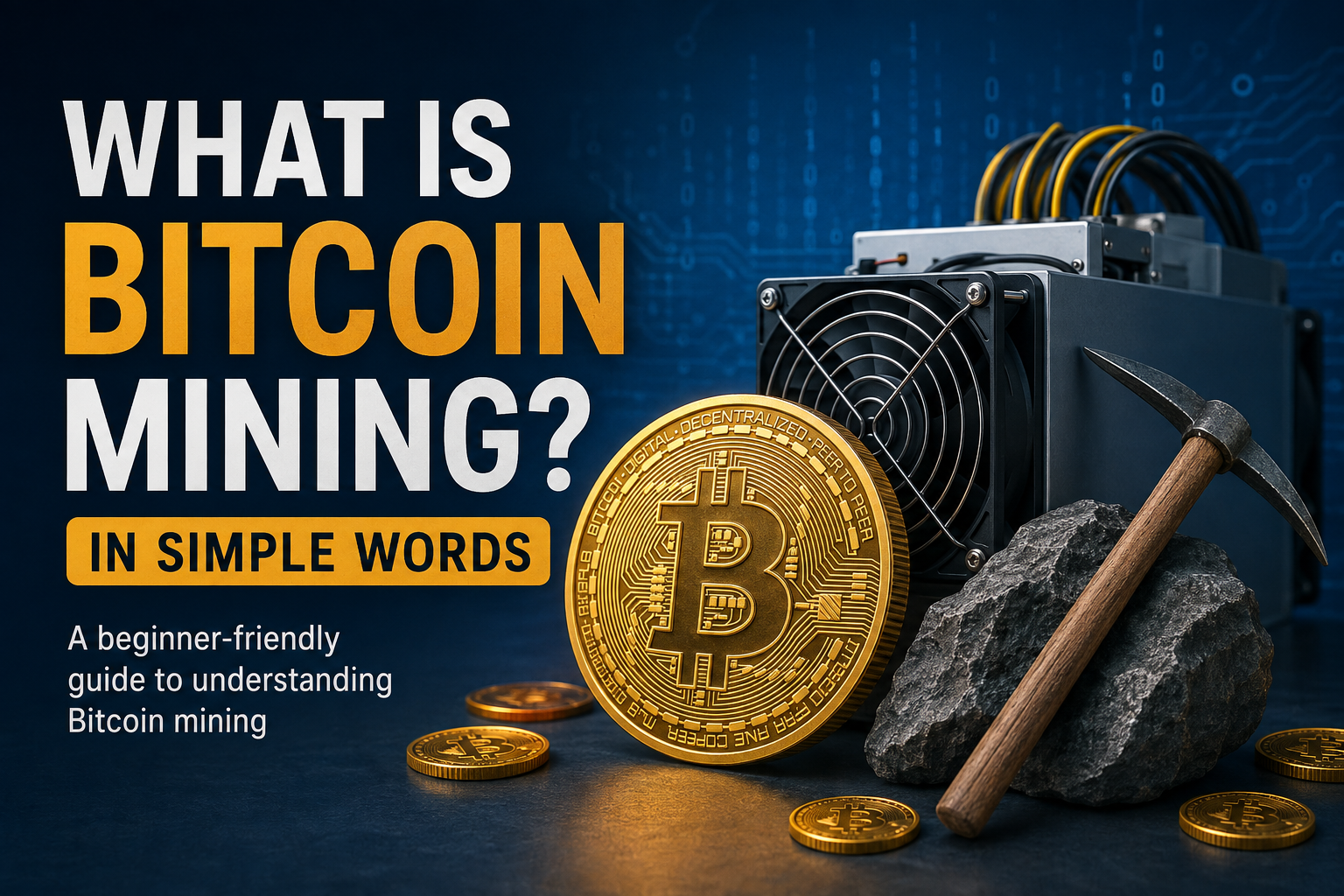
Bitcoin mining is the process of using powerful computers to help process and secure transactions on the Bitcoin network. Miners compete to solve a difficult mathematical problem. The miner who successfully solves the problem gets the opportunity to add a new group of transactions to the Bitcoin blockchain.
As a reward for doing this work, the successful miner can receive newly issued bitcoin along with transaction fees.
I like to think of Bitcoin mining as a security system for a digital currency. There is no central bank controlling Bitcoin transactions. Instead, miners and the Bitcoin network work together to make sure transactions follow the rules.
The process is automatic and happens through specialized computer equipment and software.
Why Does Bitcoin Need Mining?
One of the biggest questions beginners ask is why Bitcoin needs mining at all.
Traditional currencies such as the US dollar or Pakistani rupee are managed by financial institutions and central banks. When you send money through a bank, the bank checks your account, confirms the transaction, and records it.
Bitcoin works differently.
Bitcoin does not depend on one central organization to approve transactions. Instead, transactions are recorded on a public blockchain. Miners help confirm these transactions and protect the network from certain types of fraud.
Without a system like mining, it would be much harder for a decentralized digital currency to maintain a reliable transaction history.
In my opinion, this is one of the most interesting parts of Bitcoin. Instead of trusting one company or institution, the network uses technology, mathematics, and economic incentives.
How Does Bitcoin Mining Work?
The basic idea behind Bitcoin mining is easier than it first appears.
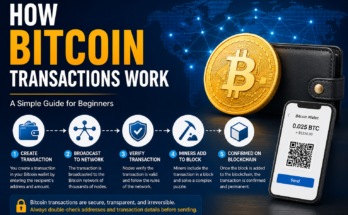
When people send Bitcoin to each other, their transactions are broadcast to the Bitcoin network. These transactions are collected into a group called a block.
Miners then compete to add this block to the blockchain.
To do this, miners use computers to perform enormous numbers of calculations. They are looking for a valid result that satisfies the Bitcoin network’s rules.
The process involves repeatedly changing a small piece of information called a nonce and calculating a cryptographic hash. The goal is to find a hash that meets the current difficulty requirement.
This may sound technical, but you do not need to understand the mathematics to understand the basic concept.
Imagine a giant digital lottery where miners keep trying different numbers. Every attempt has a very small chance of producing the required result. A miner with more computing power can make more attempts per second.
When a miner finds a valid result, the network checks the work. If everything is correct, the block can be added to the blockchain.
What Is the Bitcoin Blockchain?
To understand mining, it also helps to understand the blockchain.
The Bitcoin blockchain is a public digital record of Bitcoin transactions. You can think of it as a continuously growing digital ledger.
Transactions are grouped into blocks. These blocks are connected to previous blocks, creating a chain.
Once information becomes part of the blockchain, changing the historical record becomes extremely difficult because the network is designed to detect invalid changes.
Miners play an important role in adding new blocks to this chain.
This is why I think of Bitcoin mining as more than simply creating new coins. It is also about maintaining the transaction history that allows Bitcoin to operate without a traditional central authority.
What Do Bitcoin Miners Get as a Reward?
Bitcoin miners are not expected to spend money on expensive hardware and electricity for nothing.
Successful miners receive rewards for contributing computing power to the network.
The reward generally consists of newly issued bitcoin and transaction fees from transactions included in the block.
However, the amount of new bitcoin created through mining is not unlimited. Bitcoin has a maximum supply of 21 million coins.
The number of new bitcoins created through mining is reduced periodically through an event commonly called the Bitcoin halving. This means the amount of new bitcoin awarded for successfully mining a block decreases over time.
Because of this design, the rate at which new bitcoins enter circulation gradually becomes smaller.
What Is Bitcoin Mining Difficulty?
Bitcoin mining difficulty is another important concept.
The Bitcoin network automatically adjusts mining difficulty so that blocks continue to be produced at a relatively predictable rate.
If more miners join the network and total computing power increases, the network can make mining more difficult. If computing power decreases, the difficulty can adjust in the other direction.
This helps maintain stability.
For example, imagine that a large number of powerful mining machines suddenly join the Bitcoin network. Without difficulty adjustment, blocks could potentially be found much faster than intended.
The difficulty adjustment helps prevent that.
I find this system particularly clever because it allows Bitcoin to adapt as the amount of mining power changes.
What Equipment Is Used for Bitcoin Mining?
Bitcoin mining has changed significantly since the early days of the cryptocurrency.
When Bitcoin was first launched, people could mine using ordinary computers. As more people became interested in Bitcoin, mining became increasingly competitive.
Today, serious Bitcoin mining generally uses specialized machines called ASICs. ASIC stands for Application Specific Integrated Circuit.
These machines are designed specifically for Bitcoin mining and can perform the required calculations much more efficiently than ordinary computers.
A typical Bitcoin mining operation may also require cooling equipment, reliable internet, power infrastructure, and a large amount of electricity.
This is one reason why Bitcoin mining is no longer something that most people can profitably do with a normal home computer.
Why Does Bitcoin Mining Use So Much Electricity?
One of the most discussed topics surrounding Bitcoin mining is electricity consumption.
Mining machines perform enormous numbers of calculations continuously. Running these machines requires significant electrical power.
Large mining operations may use huge amounts of electricity because they operate many machines at the same time.
This has created an ongoing debate about Bitcoin’s environmental impact.
Some mining operations use renewable energy or electricity that might otherwise be wasted. Others depend heavily on electricity generated from fossil fuels.
So, I do not think the topic is as simple as saying Bitcoin mining is always good or always bad for the environment. The environmental impact depends partly on where the electricity comes from and how mining operations are managed.
Can Anyone Mine Bitcoin?
Technically, anyone can participate in Bitcoin mining if they have the required equipment, software, electricity, and internet connection.
The more important question is whether it is profitable.
Modern Bitcoin mining is highly competitive. Professional mining companies often operate large facilities with thousands of specialized machines.
They may have access to relatively inexpensive electricity and specialized infrastructure.
For an individual, purchasing one mining machine does not automatically mean making a profit.
You have to consider the cost of the machine, electricity, cooling, maintenance, internet, and the current Bitcoin mining difficulty. Bitcoin’s market price also affects the economics of mining.
Because of these factors, I would recommend learning about the numbers carefully before considering Bitcoin mining as an investment or business.
What Is a Mining Pool?
Another concept beginners may come across is a mining pool.
A mining pool is a group of miners who combine their computing power to improve their chances of successfully mining a block.
Instead of competing completely alone, miners contribute their computing resources to the pool. When the pool successfully earns a reward, the reward is distributed among participating miners according to the rules of the pool and the amount of work contributed.
Mining pools became important because individual miners can have an extremely small chance of finding a block on their own.
Joining a pool can provide more regular, although generally smaller, payouts compared with waiting for a solo mining success.
Is Bitcoin Mining the Same as Buying Bitcoin?
No, Bitcoin mining and buying Bitcoin are completely different activities.
When you buy Bitcoin, you are purchasing bitcoin from another person or through a cryptocurrency platform.
When you mine Bitcoin, you are contributing computing resources to the Bitcoin network and potentially earning rewards for successful mining work.
Buying Bitcoin does not require specialized mining equipment.
Mining, on the other hand, can require substantial hardware and electricity.
For someone who simply wants to own Bitcoin, buying a small amount may be much simpler than trying to mine it.
Is Bitcoin Mining Safe?
Bitcoin mining itself is a legitimate part of how the Bitcoin network operates. However, there are risks associated with mining.
The biggest risk for an individual miner can be financial. Mining equipment can be expensive, electricity bills can be high, and mining profitability can change.
There are also scams involving fake mining companies, cloud mining services, and unrealistic promises of guaranteed profits.
Personally, I would be very careful with anyone promising fixed or guaranteed returns from Bitcoin mining. Cryptocurrency markets and mining economics can change quickly.
Before spending money, it is important to understand the actual costs and risks.
Why Bitcoin Mining Is Important
Bitcoin mining serves several important purposes.
First, it helps confirm transactions.
Second, it helps protect the blockchain from fraudulent activity.
Third, it provides a decentralized method for adding new blocks to the blockchain.
Finally, mining introduces new bitcoins into circulation according to Bitcoin’s programmed rules.
This combination makes mining a fundamental part of the Bitcoin system.
Without mining or another mechanism serving similar purposes, Bitcoin would need a different way to organize transaction confirmation and network security.
Final Thoughts
When I first came across Bitcoin mining, it seemed much more complicated than it really is. The technical details can certainly become advanced, but the basic idea is quite simple.
Bitcoin miners use specialized computers to compete in a process that helps confirm transactions and add new blocks to the blockchain. In return, successful miners can receive bitcoin rewards and transaction fees.
Mining also helps Bitcoin remain decentralized because there is no single central authority responsible for maintaining the entire transaction history.
At the same time, Bitcoin mining is not an easy way to make guaranteed money. Modern mining requires specialized equipment, significant electricity, technical knowledge, and careful financial planning.
For beginners, I believe the most important thing is to understand how mining works before thinking about investing in mining equipment. Once you understand the basic concepts of miners, blocks, blockchain, mining difficulty, rewards, and mining pools, the whole subject becomes much easier to understand.
Bitcoin mining is ultimately one of the technologies that makes Bitcoin possible. It combines computer power, cryptography, economic incentives, and a decentralized network to maintain a digital financial system without relying on a traditional central authority.