When I first heard the word blockchain, I thought it was something very complicated and only related to cryptocurrency. However, after learning more about it, I realized that blockchain is much more than just a technology used for Bitcoin or other digital currencies. In my opinion, blockchain is one of the most interesting technologies because it provides a different way of storing, sharing, and verifying information without depending completely on one central authority.
Today, blockchain technology is being discussed in many industries, including finance, healthcare, business, supply chain management, gaming, and even government services. The main idea behind blockchain is quite simple. It is a digital system that records information in a way that makes it difficult to secretly change or manipulate that information later.
What Is Blockchain Technology?
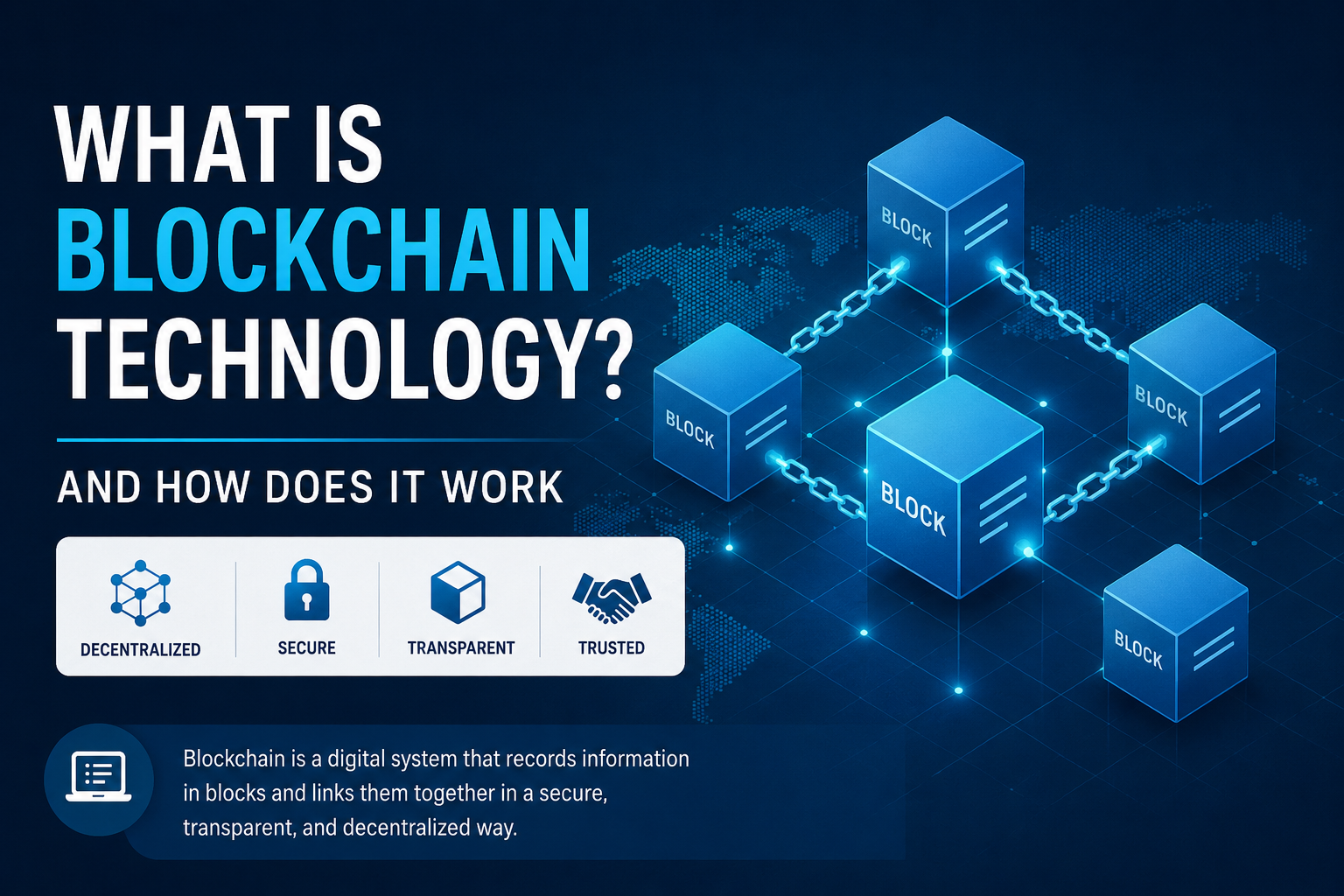
In simple words, I would describe blockchain as a digital record book that is shared among many computers. Instead of keeping all the information in one place, blockchain stores copies of the information across a network.
The word blockchain comes from two words, block and chain. A block is a collection of information or transactions. These blocks are connected with each other in a specific order, creating a chain. Once information is added to the blockchain, changing it is not easy because every block is connected to the previous block.
For example, imagine that a group of people is keeping a shared notebook. Every time someone writes a new transaction in the notebook, everyone in the group receives a copy of the updated information. If someone tries to secretly change an old entry, the other copies will show that the information does not match. This is a simple way to understand the basic idea behind blockchain.
I think this shared nature is one of the main reasons blockchain is considered different from traditional databases.
How Does Blockchain Work?
The working process of blockchain can seem technical at first, but the basic steps are actually easy to understand.
Suppose I want to send digital money to another person using a blockchain network. The transaction first needs to be created. The network then checks whether the transaction is valid.
After verification, the transaction is combined with other transactions to form a block. The network participants then agree that the block is valid through a process called consensus. Once the block is approved, it is added to the existing chain.
After that, the updated blockchain is shared across the network. This means that many computers have a record of the same information.
One important thing to understand is that different blockchain networks can use different methods to verify transactions. Some use Proof of Work, while others use Proof of Stake or other consensus methods. The purpose is generally the same, which is to make sure that the network agrees about what information should be added.
What Is a Block?
A block is basically a container that holds information. In a cryptocurrency blockchain, this information can include transactions.
A block normally contains transaction data, a timestamp, and a special digital code called a hash. It also contains information that connects it to the previous block.
A hash is like a unique digital fingerprint. If the information inside a block changes, its hash also changes. Because blocks are connected, changing information in one old block can affect the connection with the following blocks.
This is one reason blockchain records are considered difficult to manipulate.
However, I would not say that blockchain information is completely impossible to change. The real point is that changing established information can be extremely difficult and expensive, especially on large and well protected networks.
Why Is Blockchain Considered Secure?
Security is one of the biggest reasons people are interested in blockchain technology.
Traditional systems often depend on a central organization to manage information. For example, a bank keeps records of customer accounts on its own systems. Blockchain can distribute records across many computers instead.
Because many computers maintain copies of the blockchain, an attacker would generally need to overcome the network’s security mechanisms rather than simply changing one central database.
Cryptography also plays an important role. Blockchain networks use mathematical techniques to protect information and verify transactions.
For me, the most interesting part is that blockchain combines several ideas, including cryptography, distributed networks, and consensus, to create a system where participants can verify information without always needing to trust one central organization.
What Is Decentralization?
Decentralization is another important concept in blockchain.
In a traditional centralized system, one company or organization usually controls the main database. Users depend on that organization to maintain accurate records and provide access to them.
A decentralized blockchain network distributes control among many participants. There may not be one single computer or organization that controls the entire system.
This does not mean that every blockchain is completely decentralized. The level of decentralization depends on how the particular blockchain is designed and operated.
In my view, decentralization is useful because it can reduce dependence on a single point of control. At the same time, it can also create challenges because managing a decentralized system can be more complicated than managing a traditional centralized database.
The Role of Consensus
A blockchain needs a way for participants to agree about which transactions are valid. This is where consensus mechanisms become important.
Proof of Work is one well known consensus method. Bitcoin uses Proof of Work. In this system, computers compete to solve difficult mathematical problems. The process requires significant computing power and energy.
Proof of Stake works differently. Participants can help secure the network by committing cryptocurrency to the system. The network uses its own rules to select participants who can help validate transactions and add new blocks.
Both approaches have advantages and disadvantages. Proof of Work is known for its strong security but can consume a lot of energy. Proof of Stake can use much less energy, although it has its own technical and economic considerations.
Blockchain and Cryptocurrency
When most people hear blockchain, they immediately think about Bitcoin. That connection makes sense because Bitcoin was the first major application of blockchain technology.
Bitcoin uses blockchain to record transactions without requiring a traditional bank to maintain the main transaction history.
Other cryptocurrencies also use blockchain technology, although different cryptocurrencies can use different designs and features.
Still, blockchain should not be treated as another word for cryptocurrency. Cryptocurrency is one use of blockchain technology. Blockchain itself can be used for many other purposes.
Other Uses of Blockchain
I believe the future of blockchain becomes more interesting when we look beyond cryptocurrency.
For example, blockchain can be used in supply chain management. Companies can record information about products as they move from manufacturers to distributors and eventually to customers. This could make it easier to track where a product came from and how it moved through the supply chain.
Healthcare is another possible area. Blockchain could potentially help manage certain types of medical records and data sharing, although privacy and legal requirements make this area more complicated.
Blockchain can also be used for digital identity, financial services, ownership records, digital assets, and smart contracts.
Smart contracts are programs stored on a blockchain that can automatically perform actions when specific conditions are met. For example, a smart contract could release a payment after certain agreed conditions are verified.
Advantages of Blockchain
There are several advantages that make blockchain attractive.
The first advantage is transparency. Depending on the blockchain, participants can inspect transaction records and verify information.
The second advantage is security. Cryptography and network based verification can make unauthorized changes difficult.
The third advantage is reduced dependence on a central authority. In some situations, people can interact through a blockchain network without relying on one organization to maintain the entire record.
Another advantage is traceability. Blockchain can create a record that helps users follow the history of certain transactions or assets.
However, blockchain is not perfect.
Disadvantages and Challenges
One major challenge is scalability. Some blockchain networks can struggle to process large numbers of transactions quickly.
Another issue is energy consumption. Certain blockchain systems, especially those using Proof of Work, can require significant amounts of electricity.
Blockchain technology can also be difficult to understand and implement. Businesses need skilled professionals and suitable infrastructure to use it properly.
There are also privacy concerns. Some blockchain records are publicly visible, which may not be suitable for every type of information.
In addition, blockchain cannot automatically guarantee that the information entered into the system is true. If false information is added to a blockchain, the technology may preserve that false information very effectively. This is an important limitation that is sometimes ignored in discussions about blockchain.
The Future of Blockchain
I think blockchain technology still has a lot of potential, but I do not believe it will replace every traditional database or financial system.
The technology makes the most sense when several parties need to share records and do not completely trust one another or do not want one organization to control the entire record.
As the technology develops, we may see better performance, lower costs, improved privacy, and more practical applications.
For me, the biggest value of blockchain is not simply cryptocurrency. The bigger idea is creating systems where information can be shared and verified among multiple participants without relying entirely on a single central authority.
Conclusion
Blockchain technology is basically a digital system for recording and sharing information across a network. It stores information in blocks, connects those blocks together, and uses cryptography and consensus mechanisms to protect the record.
Although blockchain is strongly connected with Bitcoin and cryptocurrency, its potential goes much further. It can be used for supply chains, smart contracts, digital assets, financial services, identity systems, and other applications.
From my point of view, blockchain is important because it changes the way we think about trust and digital records. Instead of always depending on one central organization, blockchain can allow a network of participants to verify and maintain information together.
The technology still has limitations, and it is not the perfect solution for every problem. However, I believe its ability to create shared and verifiable digital records makes blockchain an important technology to understand as the digital world continues to grow.