
When I first started learning about blockchain technology, I found the whole idea of how cryptocurrencies are verified quite confusing. I kept hearing terms like Proof of Work and Proof of Stake, but I did not immediately understand what they actually meant. After learning more about blockchain, I realized that Proof of Stake is one of the most important ideas behind many modern cryptocurrencies.
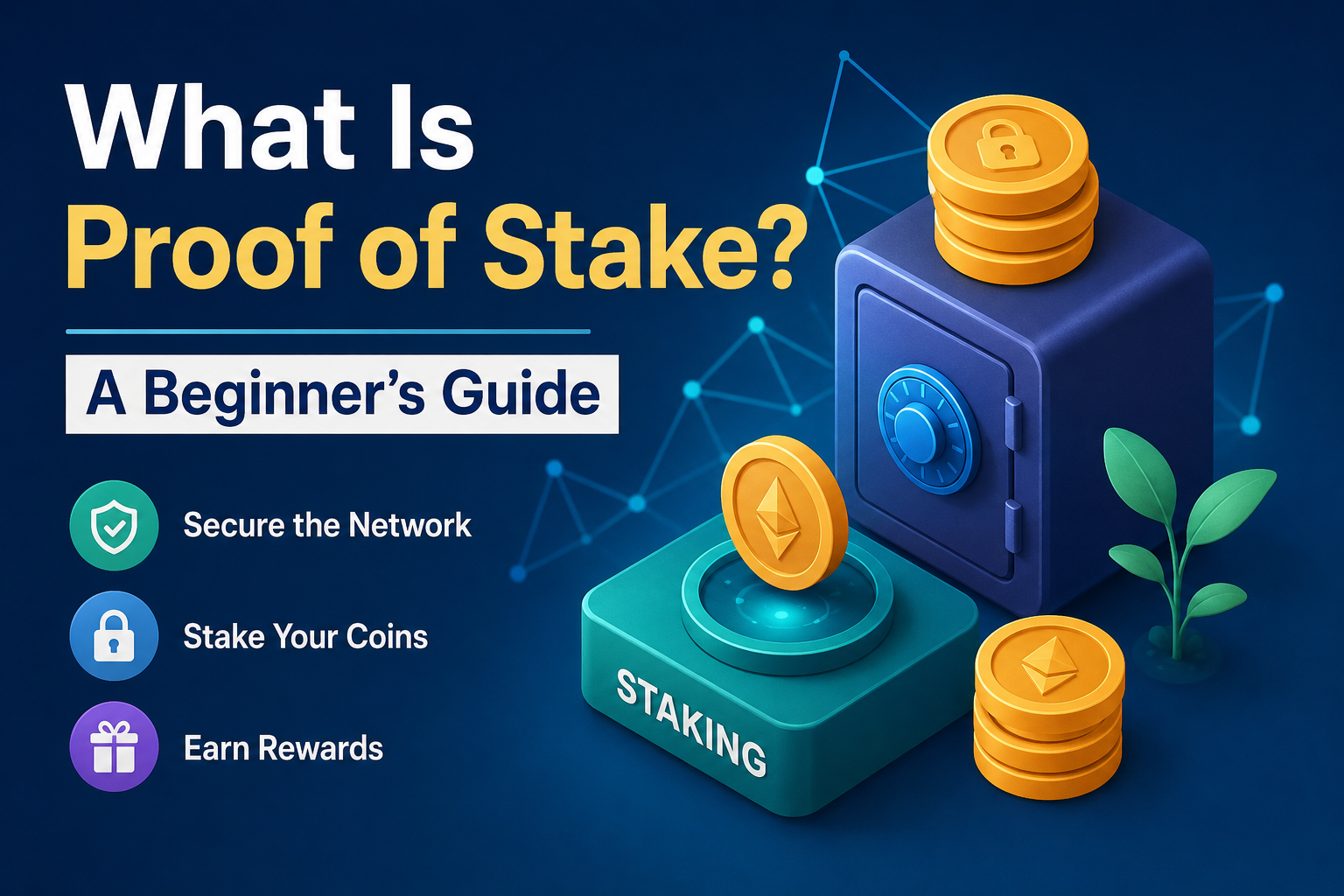
In simple words, Proof of Stake is a method used by a blockchain network to verify transactions and keep the network secure. Instead of using powerful computers to solve complicated mathematical problems, Proof of Stake allows people to participate in the network by locking or staking some of their cryptocurrency. In return, they can earn rewards for helping maintain the blockchain.
In this article, I will explain Proof of Stake in a simple way so that even someone who is completely new to blockchain can understand how it works and why it is important.
What Does Proof of Stake Mean?
Proof of Stake, usually called PoS, is a blockchain consensus mechanism. The word consensus means that computers on a blockchain network need to agree about which transactions are valid and what the current state of the blockchain should be.
A blockchain does not normally have one central company or person controlling every transaction. Instead, many computers work together to maintain the network. This creates an important question. If there is no central authority, who decides which transactions should be added to the blockchain?
This is where Proof of Stake comes in.
With Proof of Stake, people who own cryptocurrency can lock a certain amount of their coins into the network. This process is called staking. The blockchain then selects participants, commonly called validators, to help confirm transactions and add new blocks.
From my point of view, the easiest way to understand staking is to think about it like putting something valuable on the line. A validator has cryptocurrency at stake, so they have a financial reason to behave honestly and follow the rules of the network.
How Does Proof of Stake Work?
The basic process of Proof of Stake is actually easier to understand than it may sound.
First, a person decides to become a validator or participate in staking. They lock a certain amount of cryptocurrency according to the rules of that particular blockchain.
After that, the network chooses validators to perform different responsibilities. A selected validator may propose a new block containing transactions. Other validators check that block and confirm whether the transactions follow the rules.
If everything is correct, the block can become part of the blockchain.
Validators can receive rewards for performing their responsibilities correctly. These rewards are usually paid in the cryptocurrency of the network.
However, staking is not simply a way to earn free cryptocurrency. Validators also have responsibilities. If they act dishonestly or deliberately break the network rules, they can lose some of their staked funds. This penalty is often known as slashing.
I think this is one of the most interesting parts of Proof of Stake because it connects network security with financial incentives.
What Is Staking?
Staking is one of the main concepts beginners need to understand when learning about Proof of Stake.
When you stake cryptocurrency, you commit your coins to support the operation and security of a blockchain network. Depending on the blockchain, staking can be done directly as a validator or through another staking method.
For example, someone may have cryptocurrency that they do not plan to sell immediately. Instead of simply keeping it in a wallet, they may choose to stake it and potentially receive rewards.
The exact staking process is different for every blockchain. Some networks require users to meet specific requirements before becoming validators. Other networks allow people with smaller amounts of cryptocurrency to participate through staking pools or delegation systems.
So, staking does not always mean that every participant needs to operate their own powerful computer or become a technical expert.
What Is a Validator?
A validator is an important participant in a Proof of Stake blockchain.
Validators are responsible for helping the network verify transactions and maintain the blockchain. Their exact duties depend on the specific blockchain, but they generally check transactions, participate in consensus, and help confirm new blocks.
To become a validator, a person usually needs to stake cryptocurrency and operate the required software. They also need to keep their system available and follow the rules of the network.
If a validator performs their job correctly, they may receive rewards. If they behave dishonestly or violate certain rules, they may face penalties.
I personally think of validators as the people responsible for checking the work being done on the blockchain. They do not control the blockchain by themselves, but they participate in the process that allows the network to function without a central authority.
Why Was Proof of Stake Created?
One major reason Proof of Stake became popular is that it can provide an alternative to Proof of Work.
Proof of Work requires participants called miners to use computing power to solve difficult mathematical challenges. This process can require significant amounts of electricity and specialized hardware.
Proof of Stake takes a different approach. Instead of requiring participants to compete using large amounts of computing power, it uses cryptocurrency ownership and staking as part of the security system.
This can make the consensus process more energy efficient.
For me, this is one of the biggest reasons Proof of Stake is important. Blockchain technology has often been criticized because of the energy consumption associated with some Proof of Work networks. Proof of Stake attempts to solve this issue by reducing the need for energy intensive mining.
Proof of Stake vs Proof of Work
The easiest way to understand the difference is to look at what each system uses to secure the network.
Proof of Work mainly relies on computing power. Miners compete to solve mathematical problems, and the winner gets the opportunity to add a block and receive rewards.
Proof of Stake mainly relies on staked cryptocurrency. Validators are selected to participate in confirming transactions and creating or approving blocks.
In Proof of Work, expensive hardware and electricity are important parts of the process. In Proof of Stake, the amount of cryptocurrency staked and other network rules can influence participation.
Neither system is exactly the same, and both have their own advantages and disadvantages. However, Proof of Stake has become an important choice for blockchain networks looking for a more energy efficient consensus mechanism.
How Are Validators Selected?
A common question beginners have is how the blockchain decides which validator gets to create or confirm a block.
The answer depends on the specific Proof of Stake blockchain. Networks can use different selection methods and rules.
Generally, factors can include the amount of cryptocurrency being staked, how long a participant has been involved, network requirements, and other mechanisms designed to keep the selection process fair and secure.
It is important to understand that having more cryptocurrency does not necessarily mean someone gets complete control of the blockchain.
Modern Proof of Stake systems are designed with different rules and safeguards to prevent a small number of participants from easily taking over the entire network.
What Are the Benefits of Proof of Stake?
Proof of Stake has several benefits that make it attractive for blockchain networks.
The first major benefit is lower energy consumption. Since validators do not need to compete using massive amounts of computing power, the network can operate without the same type of energy intensive mining process associated with Proof of Work.
Another benefit is accessibility. Depending on the blockchain, people can participate in staking without purchasing expensive mining equipment.
Proof of Stake can also support network security through financial incentives. Validators have something valuable at risk, which encourages them to follow the rules.
Another advantage is that staking can provide rewards. People who participate in securing a blockchain may receive cryptocurrency rewards, although the amount and conditions depend on the network.
What Are the Risks of Proof of Stake?
Even though Proof of Stake has many advantages, it is not completely risk free.
One important risk is that cryptocurrency prices can change significantly. If someone stakes a cryptocurrency and its market value falls, the rewards they receive may not make up for the loss in value.
There can also be technical risks. Validators need to maintain their systems properly. If they fail to perform their duties or break network rules, they may receive penalties.
Another issue is centralization. If a small number of participants control a very large amount of the cryptocurrency, they could potentially have significant influence over the network. Blockchain developers use different mechanisms to reduce this risk, but it remains an important topic.
This is why I would not look at staking simply as an easy way to earn money. It is better to understand the network, its rules, and its risks before participating.
Is Proof of Stake Safe?
Proof of Stake can be a secure way to operate a blockchain when it is properly designed and maintained. The security comes from a combination of cryptography, economic incentives, validators, and network rules.
Validators have a reason to behave honestly because they can lose money if they seriously violate the rules.
However, no technology should be considered completely risk free. The security of Proof of Stake depends on the design of the particular blockchain, the behavior of its participants, and the software used by the network.
For beginners, I think the most important lesson is to avoid assuming that every cryptocurrency using Proof of Stake works in exactly the same way.
Why Is Proof of Stake Important for Blockchain?
Proof of Stake has become an important part of the development of blockchain technology.
It provides a different way to achieve agreement between computers without relying on traditional mining. It can reduce energy consumption while still providing economic incentives for people to help secure the network.
As blockchain technology continues to develop, I believe understanding Proof of Stake will become increasingly useful. It is not only relevant to cryptocurrency investors. It is also important for anyone interested in decentralized applications, digital assets, smart contracts, and the future of blockchain technology.
Final Thoughts
After learning about Proof of Stake, I think the concept becomes much easier when we stop looking at it as a complicated technical term.
At its core, Proof of Stake is a system that allows people to help secure and operate a blockchain by putting cryptocurrency at stake. Validators check transactions, participate in creating and confirming blocks, and receive rewards when they follow the rules. At the same time, they can face penalties if they act dishonestly or fail to meet important requirements.
The biggest difference from Proof of Work is that Proof of Stake does not depend on large amounts of computing power to secure the network. Instead, it uses staked cryptocurrency and economic incentives.
For anyone who is just starting to learn about blockchain, I would say Proof of Stake is definitely a concept worth understanding. Once you understand staking, validators, rewards, and penalties, many other blockchain concepts become much easier to understand. In my view, Proof of Stake represents an important step in the evolution of blockchain technology and shows how financial incentives can be used to help decentralized networks work without depending on a central authority.